


 Search


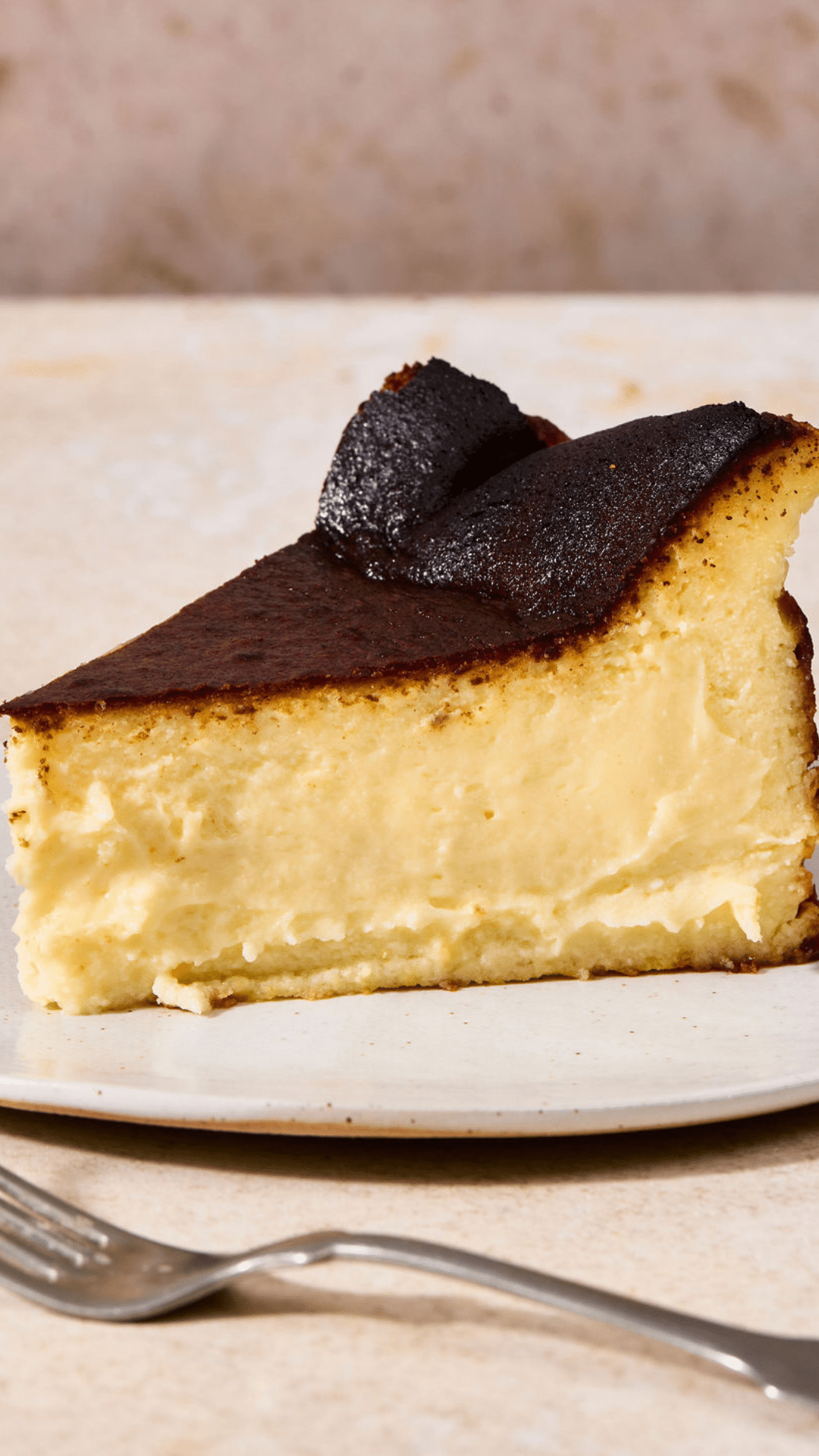
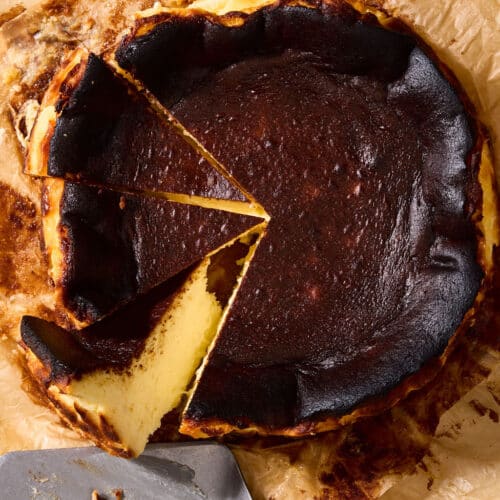
Basque cheesecake, aka “burnt cheesecake”, is a crustless Spanish dessert with a dark, caramelized exterior. And a super creamy – and rich – custard-like center! This deeply golden cheesecake requires no water bath!
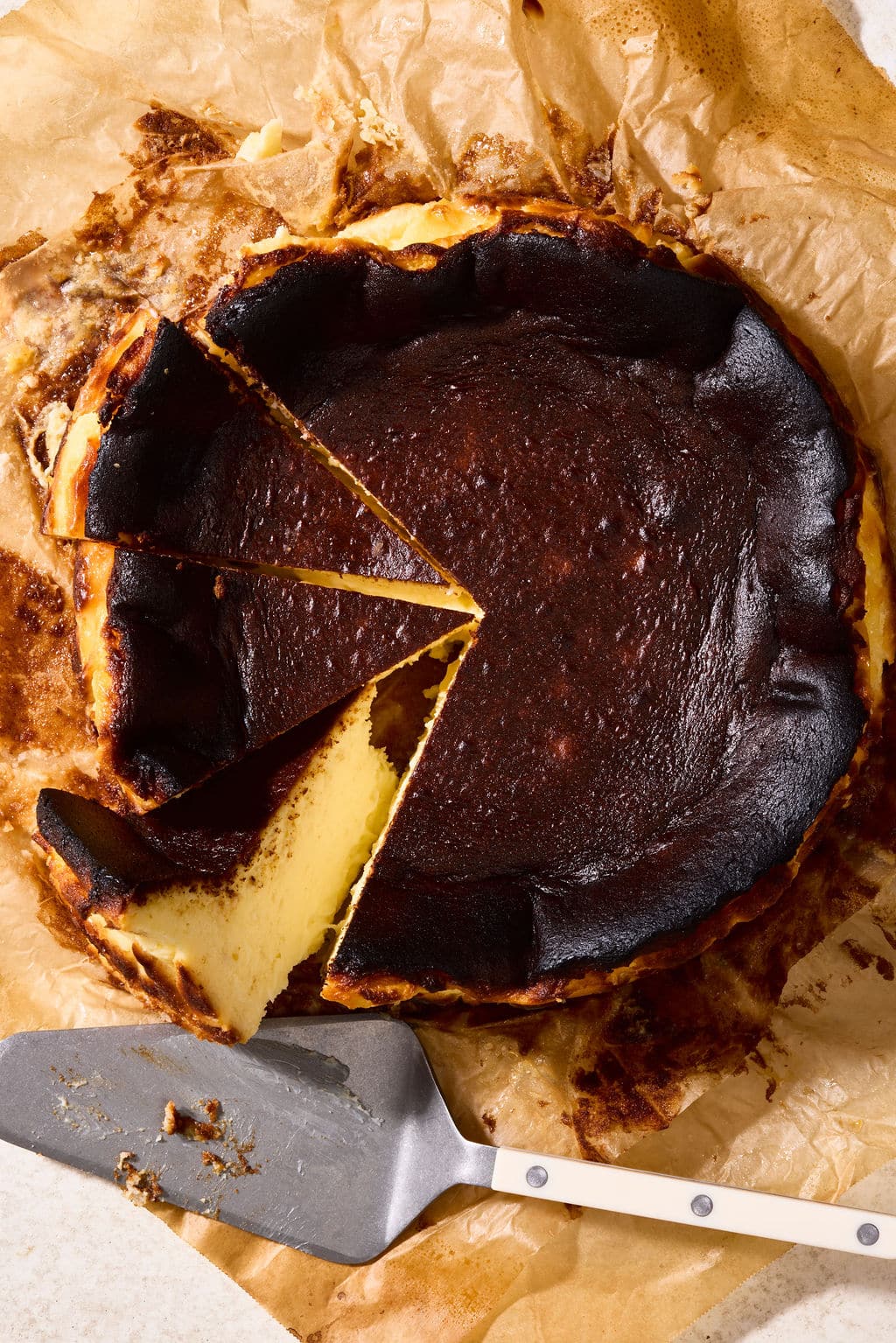
The Queen Of Baked Cheesecakes?
At this point in my baking career, I can easily say that I consider myself a cheesecake expert! This is not a puff up my chest statement, not a humblebrag. I’m making this point to reassure you that even if you’re new to making cheesecake, you can trust my recipes. Especially when it comes to cheesecake!
Over the past 16 years, I’ve shared my famous creamy cheesecake, New York cheesecake, and chocolate cheesecake recipes. But I have to confess this burnt basque cheesecake recipe is my new favorite baked cheesecake recipe! Deeply golden brown, with a rich custard filling… I like to close my eyes when I take the first bite and let my mind float to heaven.
What is a Burnt Basque Cheesecake?
A burnt basque cheesecake differs from classic cheesecake is a few ways:
- No water bath required! Instead, a basque cheesecake relies on high heat for it’s signature sunken center and deeply golden brown color.
- No graham cracker crust for this baked cheesecake. You’ll make this crustless cheesecake in a springform pan lined with parchment paper. Of course, you can add a graham cracker crust. But this is not the authentic way of making this dessert.
- The rich custard cheesecake filling gets its flavor from large eggs, lots of vanilla extract, and heavy cream.
- Chef Santiago Rivera invented this Spanish dessert in 1989 in San Sebastián, Spain.
- Unlike American cheesecake, it has no cookie or cracker crust. This lets the rich, sweet cream cheese flavor hit your palate at once.
- Some people like to add orange zest or almond extract to their burnt basque cheesecakes. But I prefer the filling with just vanilla extract and a touch of lemon juice.
If you love classic cheesecake, I definitely think you’ll love this Spanish version! Everyone I know who tries it loves it – and doesn’t even miss the graham cracker crust!
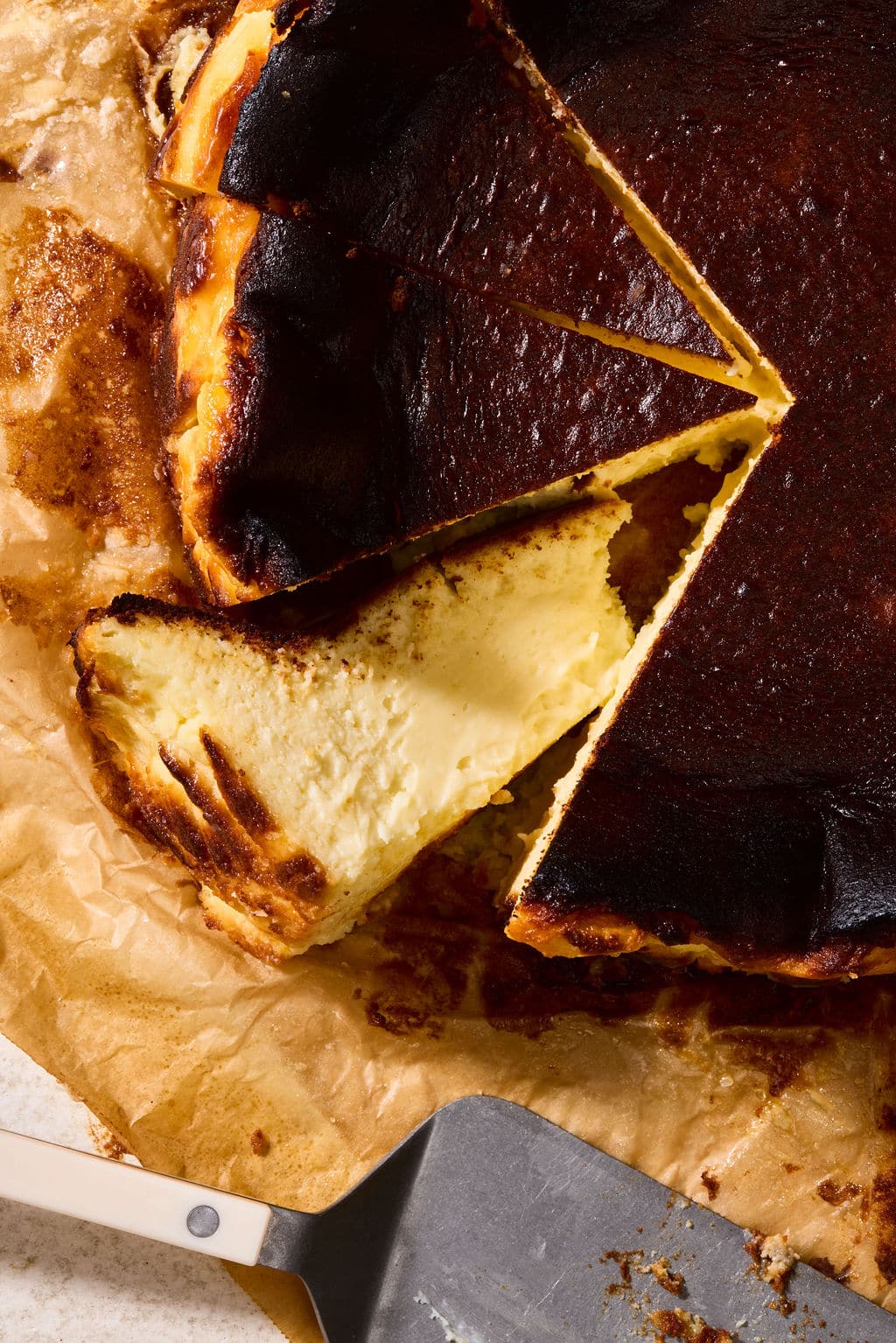
Deeply Golden VS Burnt
A lot of the recipes I see on the internet for basque cheesecake feature a golden brown to deeply golden brown color. I prefer to push my color a little further, until it’s very very golden brown, and perhaps even a little burnt looking. It’s not called burnt basque cheesecake for nothing!
That said, you can control your basque cheesecake’s color by watching it closely during the last 20 minutes of baking. I don’t mind color on my dessert and push it to the darkest hue before it’s burnt. I love the contrast between the dark deeply golden brown exterior and the pale creamy interior!
But do what makes you comfortable here! It’ll be delicious no matter what! You can always go darker on your next cheesecake if you want to start on the lighter side.
Ingredients You’ll Need
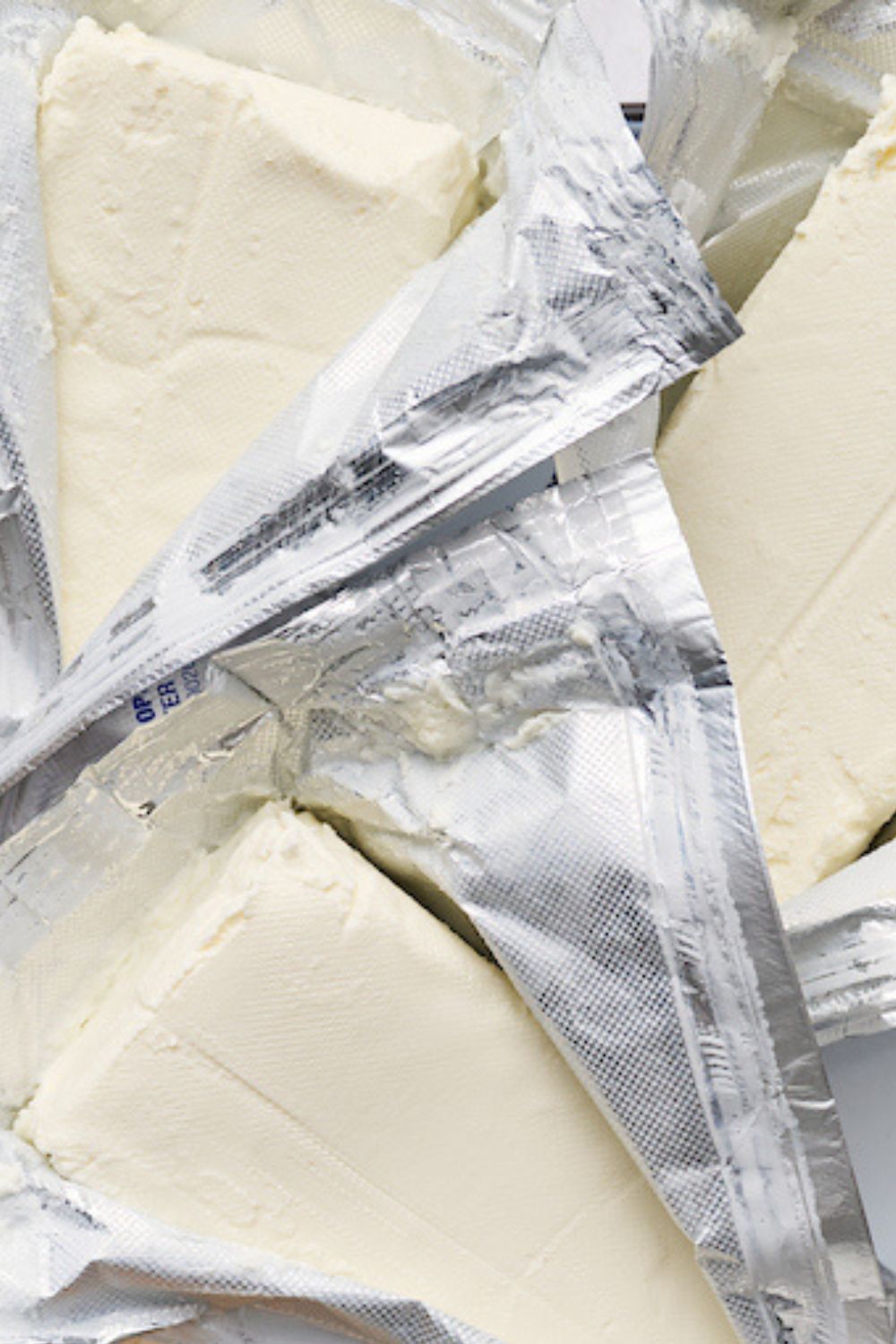
- Full-Fat Cream Cream: Use brick-style cream cheese and make sure it’s at room temperature before baking. I don’t suggest using reduced fat cream cheese or cream cheese from a tube.
- Sugar: Don’t reduce the amount of sugar or use another variety. If you sub brown sugar the color of your cheesecake will be quite brown inside and out.
- Eggs: Use large eggs and yes – this recipe truly calls for 7 whole eggs!
- Heavy Cream: Don’t sub for milk or sour cream, these won’t add the right texture.
- Salt: Balances the sweetness and enhances the other flavors in the basque cheesecake.
- Vanilla Extract: Pure vanilla extract adds sweet rich flavor and enhances the other flavors.
- Lemon Juice: Just a touch rounds out the flavors and adds balance.
- All-Purpose Flour: Thickens the custard like filling just enough.
With just 8 ingredients, it’s important to use quality ones, and follow the recipe exactly as written. If you’d like, you may add 1 teaspoon of orange zest and 1/2 teaspoon of almond extract for even more flavor!
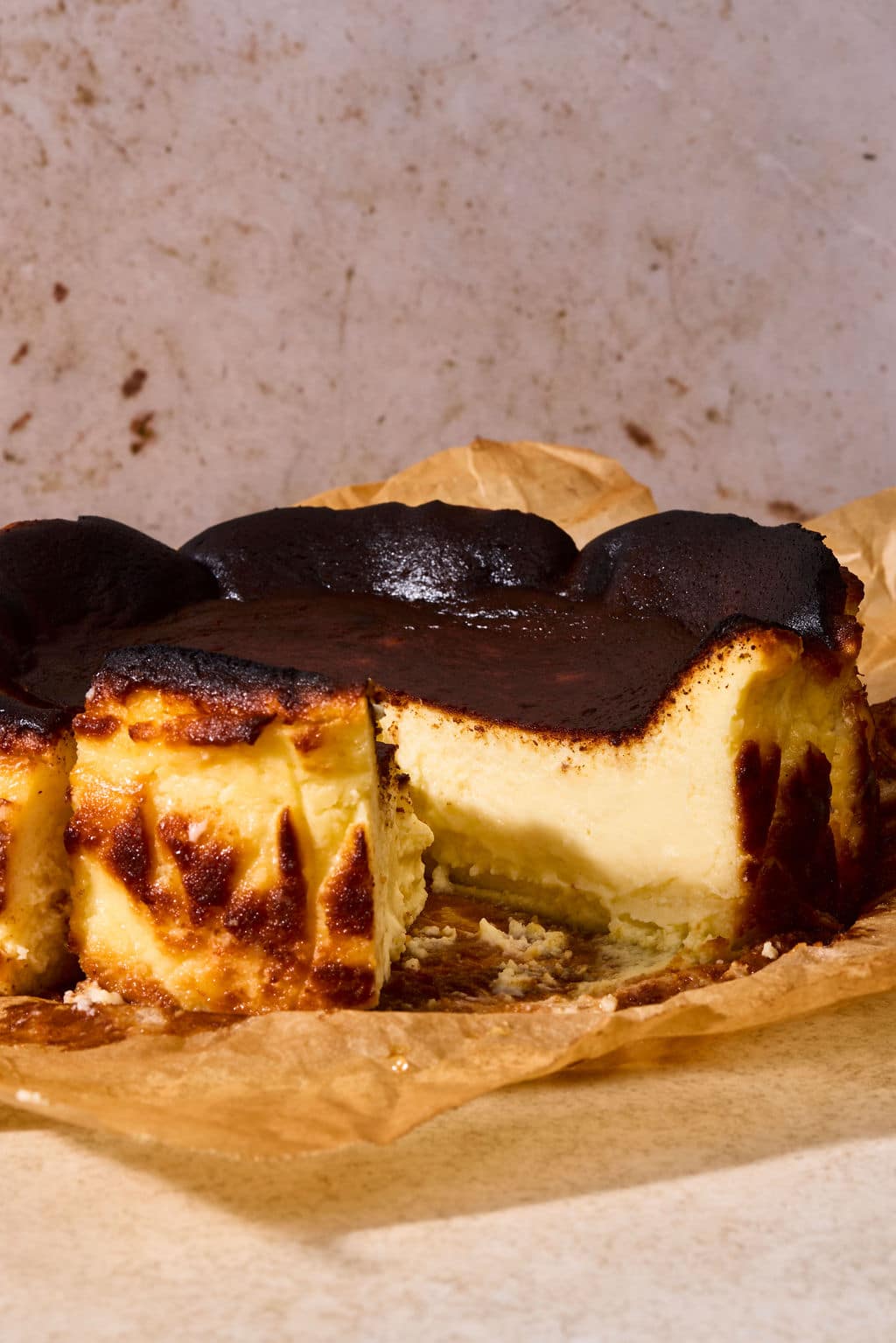
Let’s Bake Basque Cheesecake
- Prep the Pan: Line a 10-inch baking pan with parchment paper, allowing the paper to come over the edges of the pan by 2-inches.
- Cheesecake Batter: Make in the bowl of a stand mixer fitted with the paddle attachment, or a large bowl using a handheld electric mixer. Beat on low speed, scraping down the sides of the bowl as needed. This ensures a silky smooth cheesecake batter.
- Bake the Cheesecake: Pour the cheesecake batter into the prepared pan and bake for about 50 minutes, or until deeply golden brown. Carefully remove the cheesecake from the oven.
- Cool the Cheesecake: The hardest part of the recipe! Allow the basque cheesecake to cool at room temperature for at least 2 hours. Then place in the fridge to chill for another 6 to 8 hours. Or overnight!
Although waiting for this cheesecake to cool can be hard! It’s always worth the wait. And it’s a great make-ahead dessert recipe option! You can make this basque cheesecake recipe up to 5 days in advance.
Just cool completely, then cover and chill in the fridge until needed. About 20 minutes before you plan on serving, remove the cheesecake from the fridge. Allow the cheesecake to sit at room temperature for 15 to 20 minutes before slicing for the creamiest texture!
What to Serve with Basque Cheesecake?
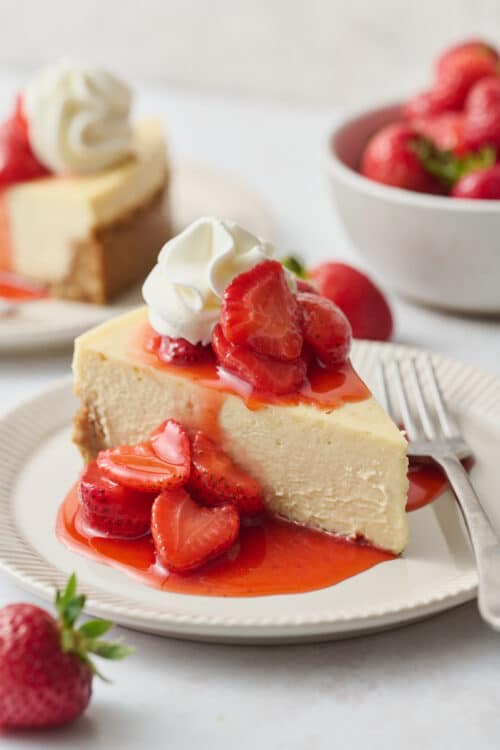
Traditionally, chef’s serve Basque cheesecake unadorned. But you can add salted caramel, strawberry sauce, whipped cream, or even hot fudge sauce. My personal favorite is fresh in-season berries, or poached apples or pears in the fall. A cranberry compote would also be delicious for Thanksgiving or Christmas!
If you’ve made and loved my other baked cheesecake recipes, you have to try this Spanish burnt basque cheesecake! Absolutely stunning and delicious, it makes a great conversation piece. My family has already requested I make it for Thanksgiving instead of my usual pumpkin cheesecake. Hmm… perhaps a pumpkin basque cheesecake will be my next cheesecake recipe!?
Basque Cheesecake

Ingredients
- 4 (8 ounce) blocks brick-style cream cheese room temperature (32 ounces total)
- 1 and 3/4 cups (484g) granulated sugar
- 7 large eggs room temperature
- 2 cups (454ml) heavy cream
- 1/4 teaspoon salt
- 1 Tablespoon pure vanilla extract
- 2 teaspoons freshly squeezed lemon juice
- 2 Tablespoons (28g) all-purpose flour
Instructions
- Preheat the oven to 425°F, with the shelf in the middle. Scrunch up 2 (16×12-inch) pieces of parchment paper.
- Press the scrunched up parchment paper into a 10-inch spring form pan, making sure parchment comes at least 2" above the top of the pan on all sides of the pan, pressing as firmly into the pan as possible.
- Place the prepared pan on a rimmed baking sheet and set aside until needed.
- In the bowl of a stand mixer fitted with the paddle attachment, or in a large bowl using a handheld electric mixer, beat the cream cheese on medium-speed for 2 minutes, or until completely smooth and lump free.
- Gradually add in the sugar, with the mixer running on low speed, until sugar is completely incorporated into the cream cheese, about 25 seconds.
- On low speed, at the eggs, one at a time, allowing the egg to completely mix into the mixture before adding the next egg, stopping the mixer and using a spatula to scrape the sides and bottom of the bowl as needed.
- Once all of the eggs have been added, pour in the heavy cream and beat on low for 15 seconds, or until just combined.
- Finally, add in the salt, vanilla, lemon juice, and flour. Mix on low until just combined. You never want to over mix – or beat on high – as this will incorporate too much air into the cheesecake batter!
- Pour the cheesecake batter into the pan. It will be very full to the top! Gently bang the pan on the countertop to pop bubbles, and pop any additional bubbles gently with a knife.
- Bake for 45 – 50 minutes, or until deeply (and evenly) brown, rotating the pan in the oven if the cheesecake appears to be overly browning in one area.
- Remove cheesecake from the oven and cool at room temperature for at least 2 hours. Then place in the refrigerator to chill overnight – or for at least 8 hours.
- Before serving, remove from the fridge and let sit at room temperature for 15 minutes. Then slice and serve!



I recently used this recipe in my restaurant, and it was a huge success with our customers!
is it possible to make this with airfryer?
Hi! I don’t think this would work well in an air fryer!
I baked this cheesecake for family dinner; the caramel top was gorgeous. A 6-inch pan timing note would help.